
Cooking pasture-finished (100% grass-fed) beef is a completely different game than cooking standard grain-fed beef. Because the cattle spend their entire lives foraging on open pastures, the meat is naturally leaner, has tighter muscle fibers, and features a distinct, robustly earthy flavor profile.
If you cook it exactly like conventional beef, you’ll likely end up with something resembling a leather boot. Because it lacks the insulating, heavy intramuscular fat (marbling) of grain-finished beef, it cooks about 30% faster and is sensitive to high heat.
To get melt-in-your-mouth tenderness and maximize that rich flavor, look at the core principles and techniques for success.
The Golden Rules of Pasture-Finished Beef
Before the meat even touches a pan, these three foundational habits will completely change your results:
Bring it to Room Temperature: Never throw cold grass-fed beef into a hot pan. Because it’s so lean, the temperature shock will cause the muscle fibers to seize up instantly, making it tough. Let it sit on the counter for 30 to 45 minutes before cooking.
Add Fat Liberally: Since pasture-finished beef lacks the natural intramuscular marbling of grain-fed cattle, you need to bring your own fat to the party. Cook with healthy fats like butter, ghee, beef tallow, or olive oil to protect the meat from drying out and to enhance its flavor.
Lower the Heat: As a general rule, reduce your cooking temperatures by about 45°F to 50°F compared to conventional beef. Think medium heat instead of high heat for stovetop cooking.
Target Medium-Rare (Max): Pasture-finished beef tastes best and stays juiciest when cooked to rare or medium-rare (130°F to 135°F). If you push it past medium, it loses its structural moisture completely.
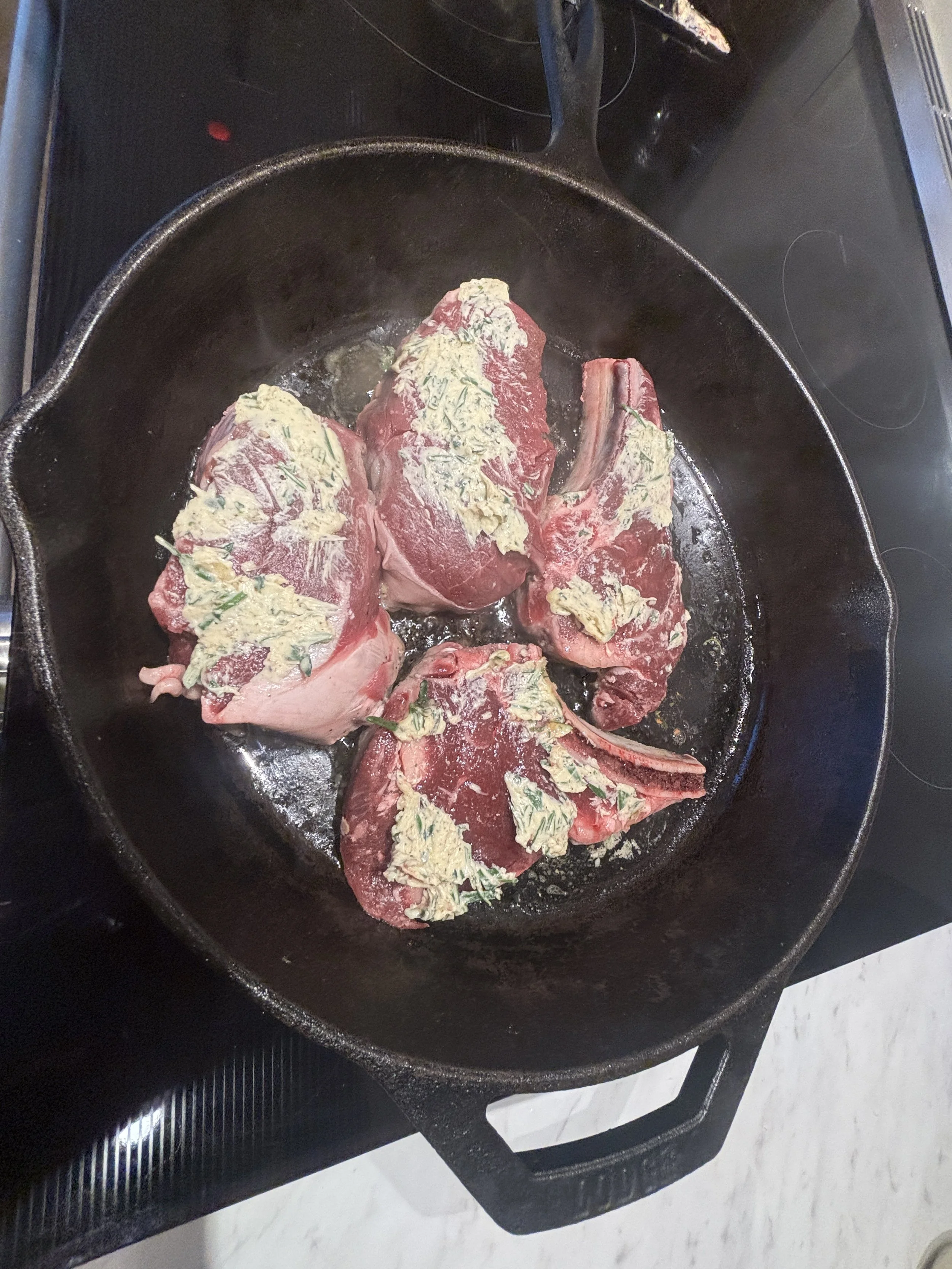
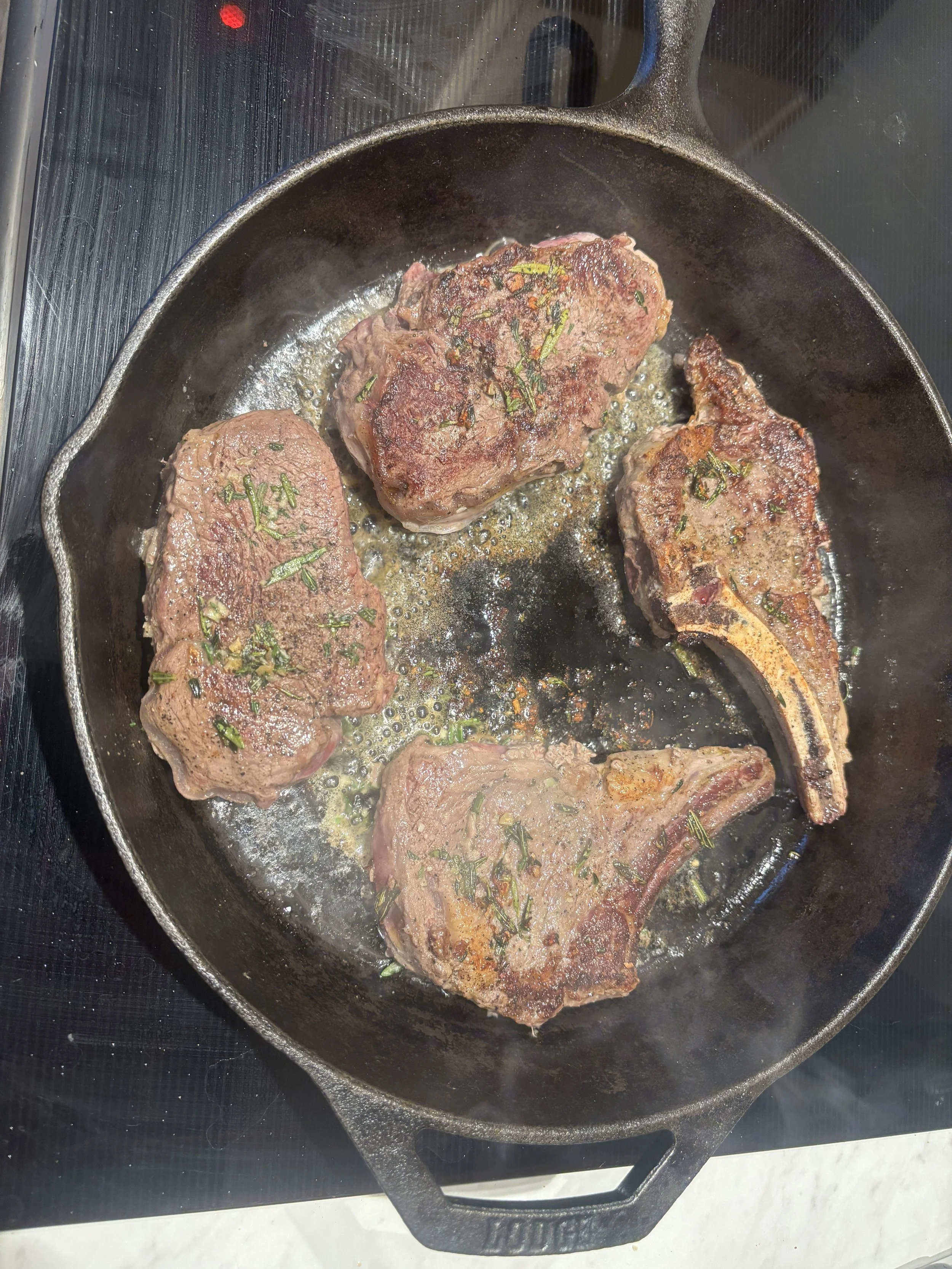
Technique 1: The Reverse Sear (For Thick Steaks)
For premium steaks like ribeyes, New York strips, or filets that are at least an inch thick, the reverse sear is the absolute best method. It allows you to bring the interior up to temperature evenly without drying out the exterior.
Season and Dry Brine: 12 to 24 hours ahead.
Generously salt your steak with coarse kosher salt and leave it uncovered on a wire rack in the fridge overnight. This draws out moisture, concentrates the beef flavor, and breaks down tough proteins.
Low and Slow Bake: 20 to 30 mins.
Preheat your oven to a low 225°F to 250°F. Place the room-temperature steak on a baking sheet and cook until the internal temperature reaches about 110°F to 115°F on a digital meat thermometer.
The Flash Sear: 1 to 2 mins total.
Heat a cast-iron skillet over medium-high heat with a high-smoke-point oil (like avocado oil or beef tallow). Sear the steak for only 45 to 60 seconds per side just to get a beautiful crust. Add a tablespoon of butter and fresh herbs in the final 30 seconds to baste.
Rest: 5 to 8 mins.
Transfer to a warm plate and tent loosely with foil. Resting allows the juices to redistribute throughout the muscle fibers instead of spilling out onto your cutting board.
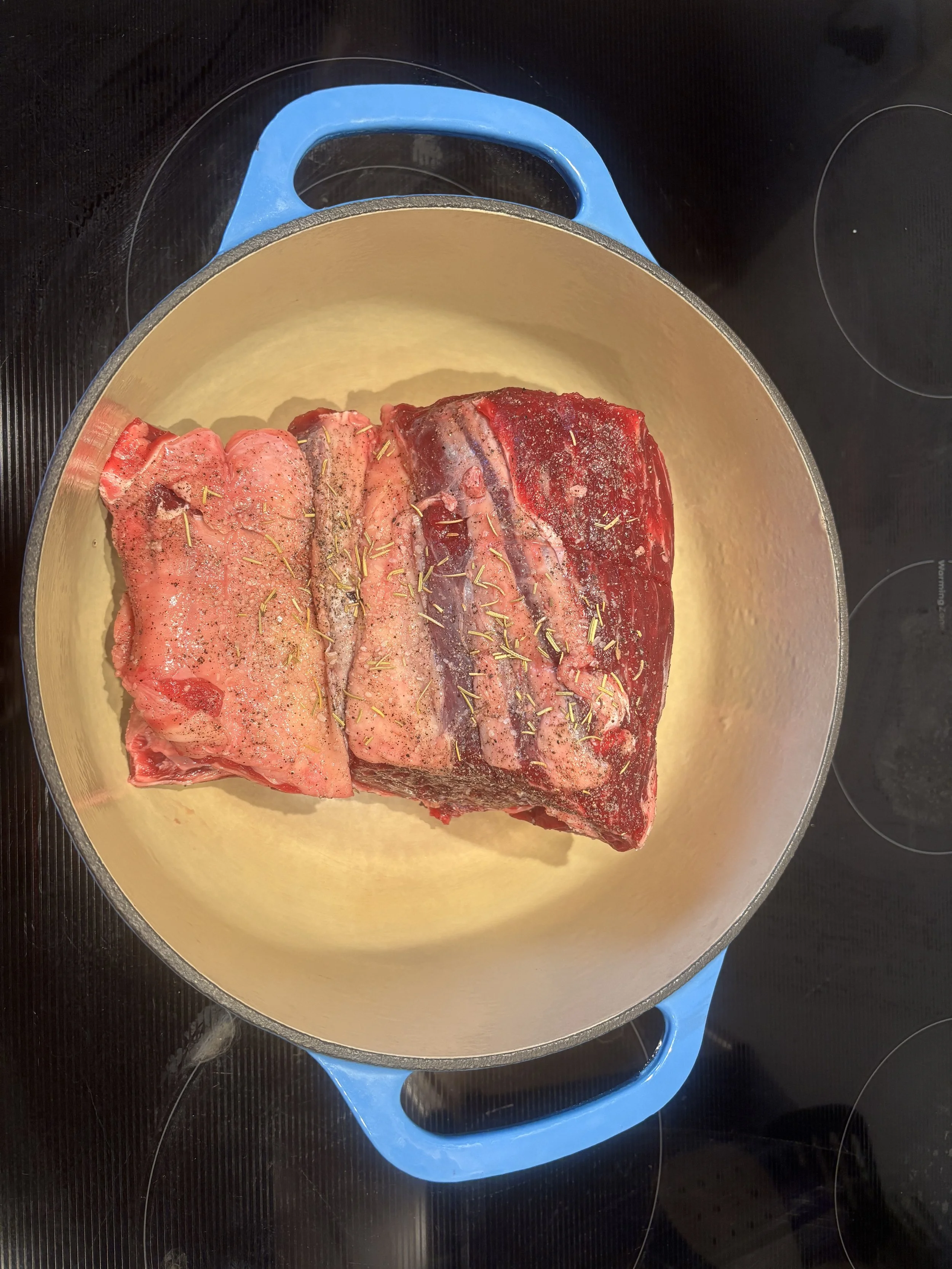
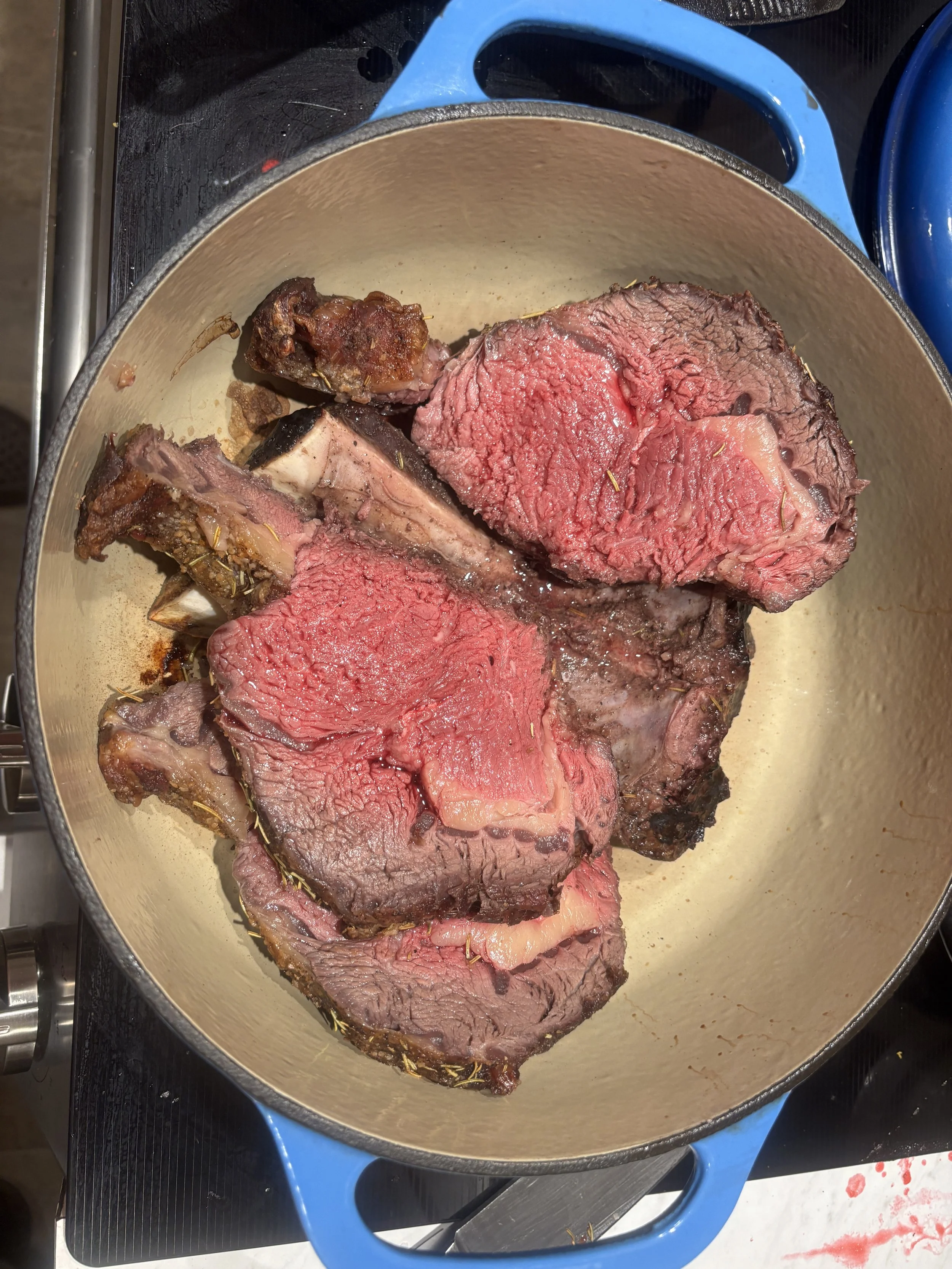
Technique 2: Low and Slow Braising (For Tougher Cuts)
For lean, hardworking cuts like chuck roast, brisket, shank, or short ribs, you need to rely on liquid, acid, and time to dissolve the tough collagen into rich, velvety gelatin.
Introduce Fat: Because pasture-finished beef cuts have very little fat of their own, always brown them in a healthy amount of external fat (like butter, ghee, or lard) before simmering.
Use Acid: Always include an acidic element in your braising liquid—such as red wine, crushed tomatoes, or a splash of apple cider vinegar. The acid gently coaxes the tight muscle fibers to relax.
Keep the Lid Tight: Braise in a heavy Dutch oven at 300°F in the oven rather than on the stovetop. This provides an even, surrounding heat that transforms tough meat into ultra-tender shreds over 3 to 4 hours.
💡 Flavor Pairing Tip: Pasture-finished beef has a complex flavor that pairs incredibly well with fresh, bright notes. Try serving your steaks or roasts with a vibrant green chimichurri, a squeeze of fresh lemon juice, or a compound butter mixed with fresh rosemary and garlic to perfectly complement the earthy profile of the meat.