
The Backbone of Our Beef Operation
Why Pineywoods Cattle are the backbone of our Regenerative Beef
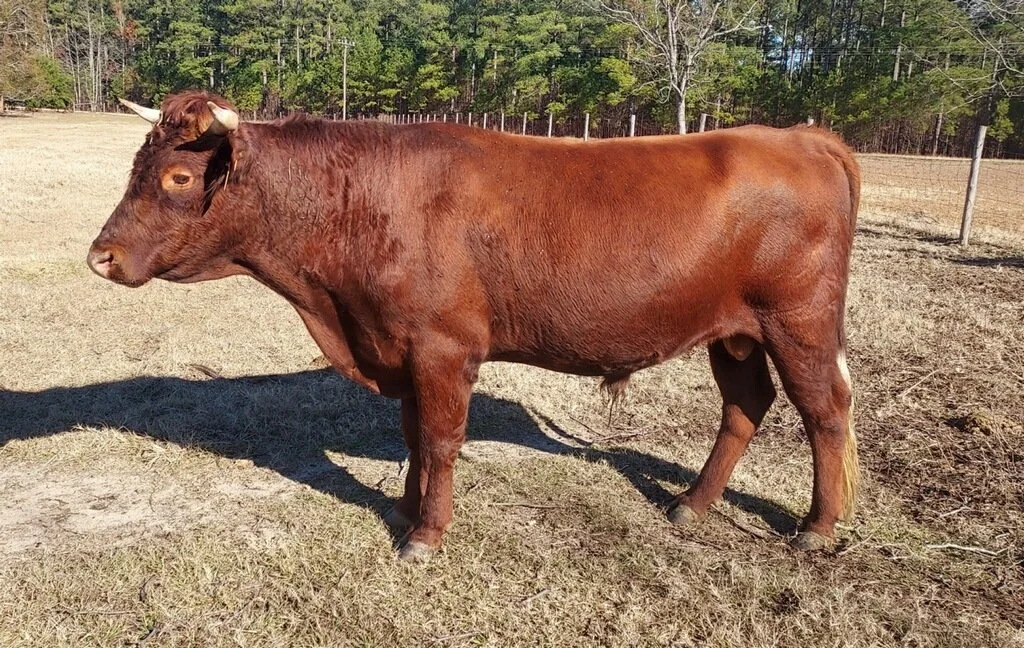
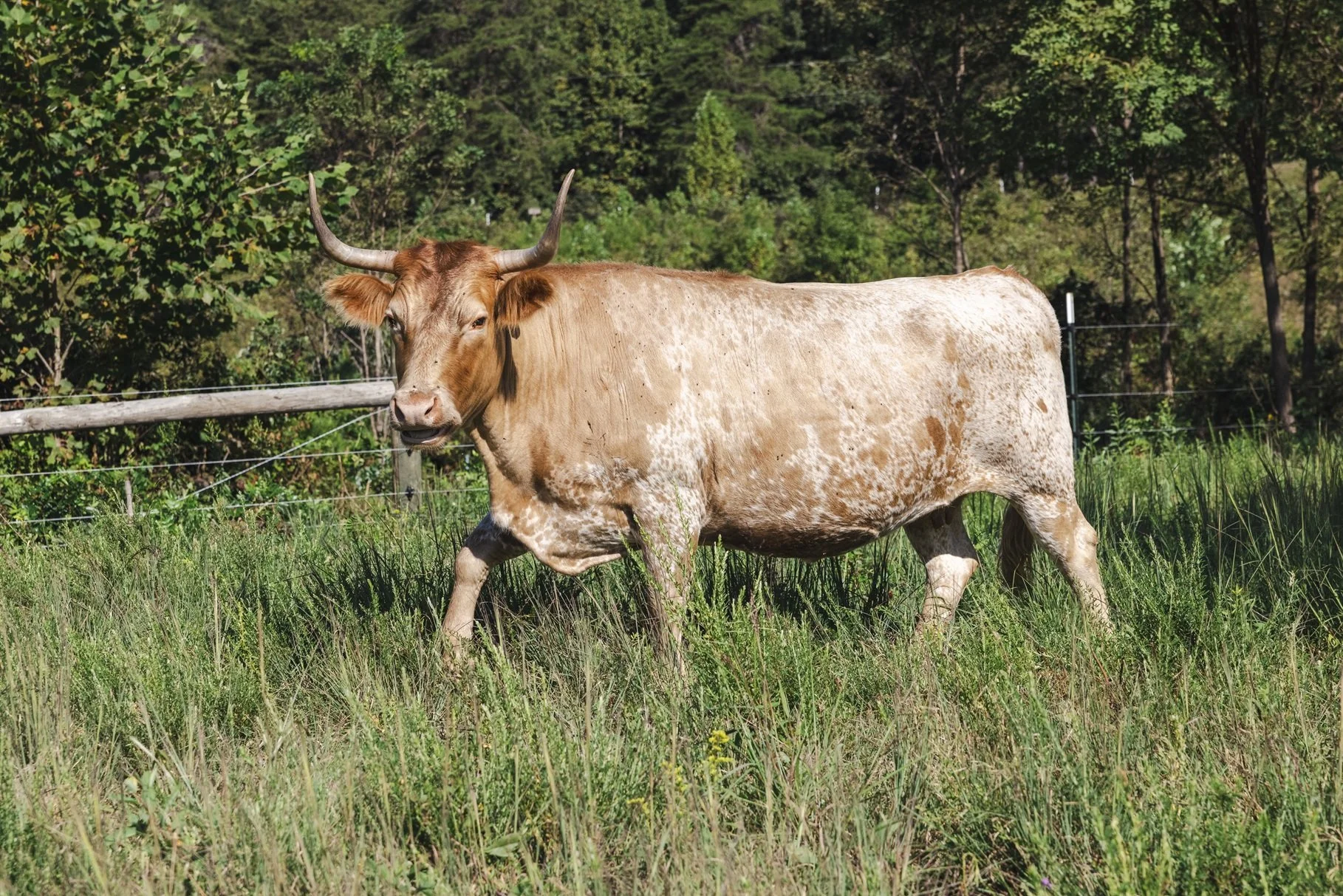
Ditch (Jim) from Ossahatchee Farm - Pineywoods Palmer Dunn
When we started Purple Mockingbird Farm, we knew we didn’t want a "cookie-cutter" herd. To succeed in the hot, humid, variable climate of Appomattox, Virginia—and to truly embrace regenerative agriculture—we needed cattle that were as resilient as the land itself.
That search led us to the Pineywoods, and they have become the absolute backbone of our farm's success.
A Landrace, Not a Modern Breed
It is important to understand that the Pineywoods is not a "modern breed" in the way most people think of cattle today. Most modern breeds have been intensely "engineered" over the last century through artificial (human) selection to perform in a very specific, controlled environment: the grain-fed feedlot.
The Pineywoods, however, is a landrace.
A landrace is a local variety of an animal that has developed over centuries through natural selection rather than human whim. Descending from Spanish stock brought over in the 1500s, these cattle spent 500 years surviving and thriving in the rugged, brushy terrain of the Southeast with little to no human intervention. Nature was their breeder. Only the strongest, smartest, and most efficient survived.
This history has gifted them with "survival genetics" that modern industrial breeds have simply lost. They are naturally more resistant to local pests and diseases, and their mothering instincts are second to none. This means less need for chemical inputs like anti-parasitics and other medications and medical intervention.
Built for the Virginia Heat
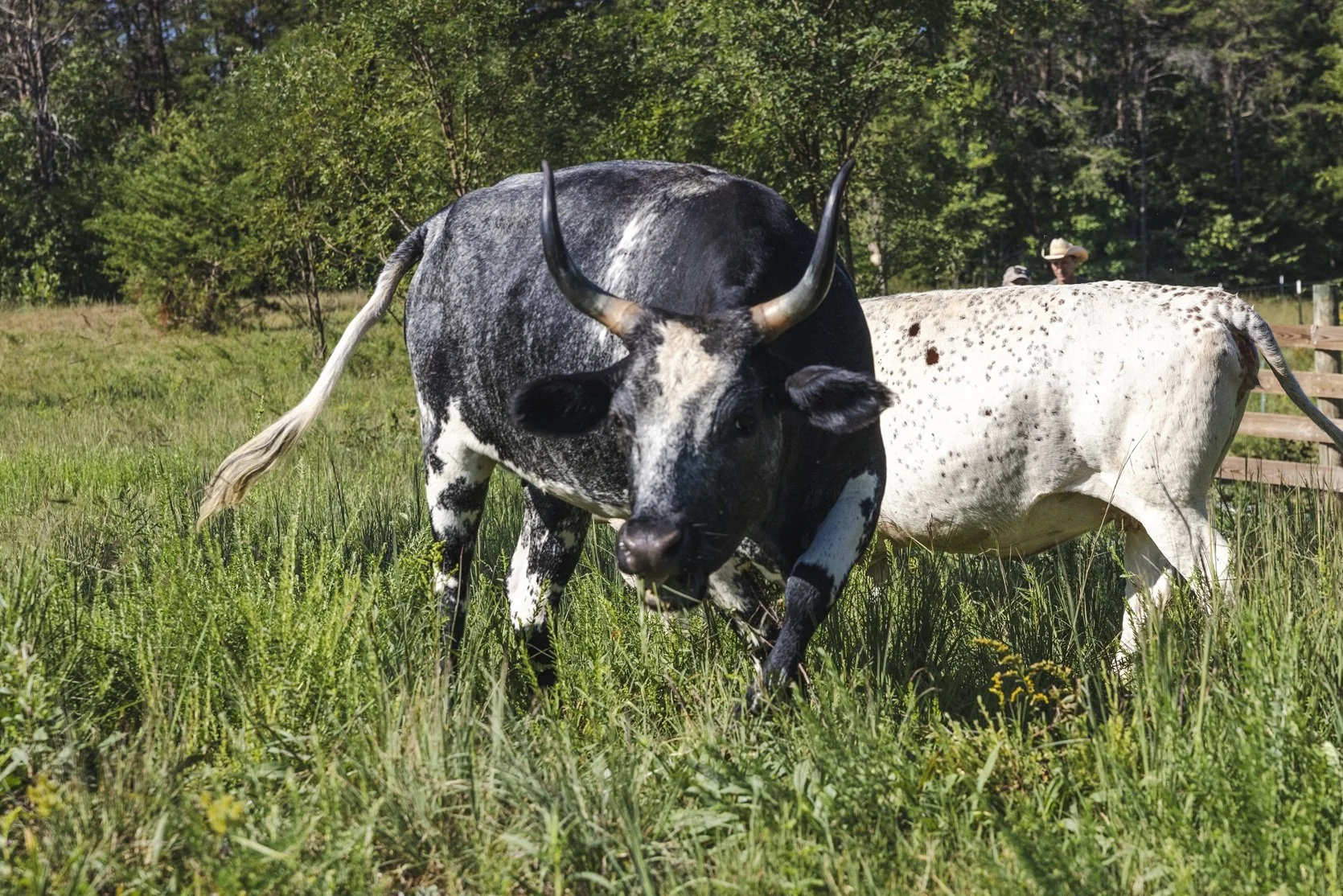
For us, perhaps their most impressive trait is their climate adaptability. Because they evolved in the deep South, they handle the "wall of heat" in a Virginia summer better than almost any other bovine. While other breeds huddle under single trees panting during a July heatwave, our Pineywoods are out grazing, relatively unfazed by the humidity. They don't just survive here; they belong here.
Hybrid Vigor and the "Mixed" Advantage
While we champion the Pineywoods as our foundation, we aren't "breed elitists." In fact, we believe some of the strongest resilience on a farm comes from hybrid vigor.
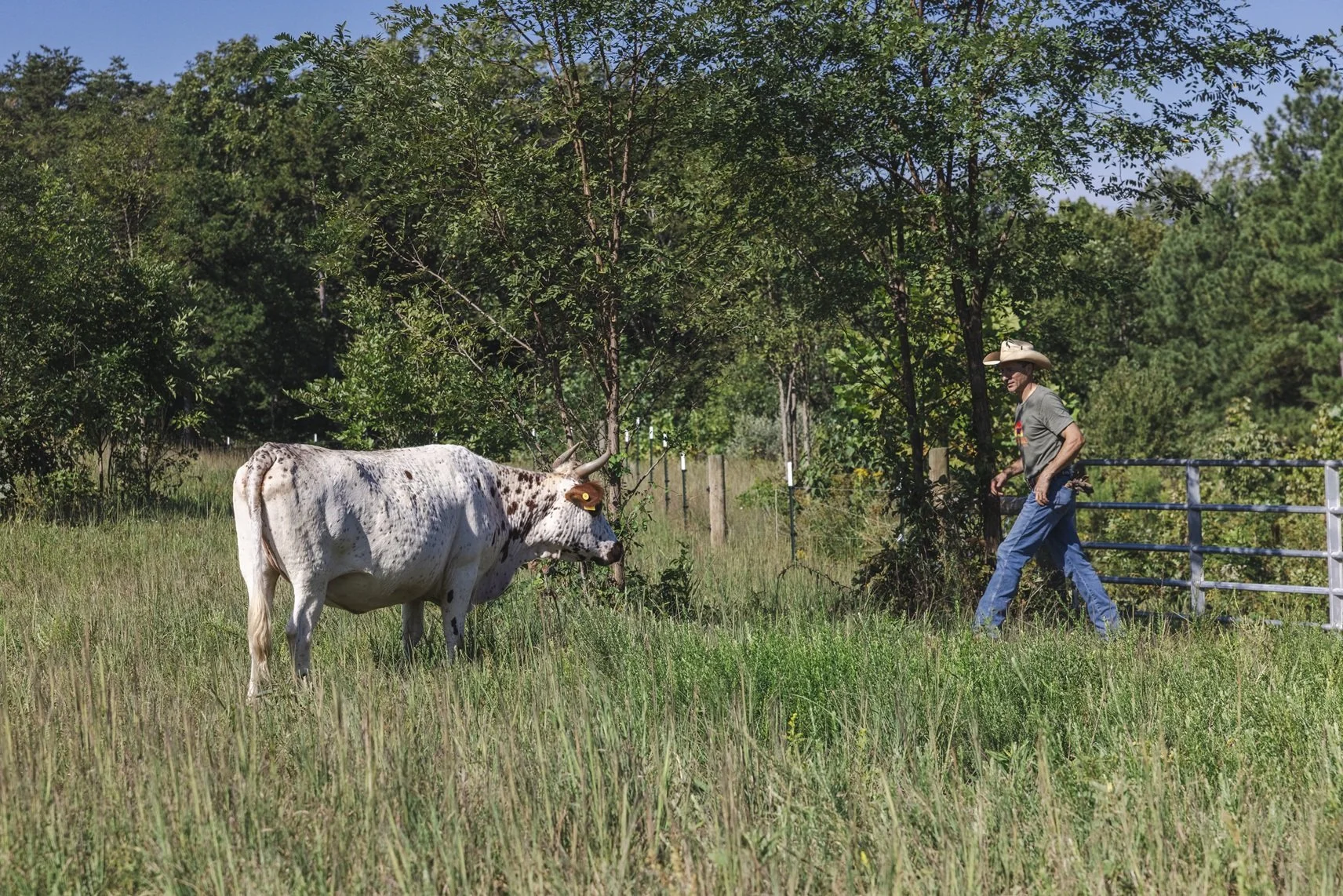
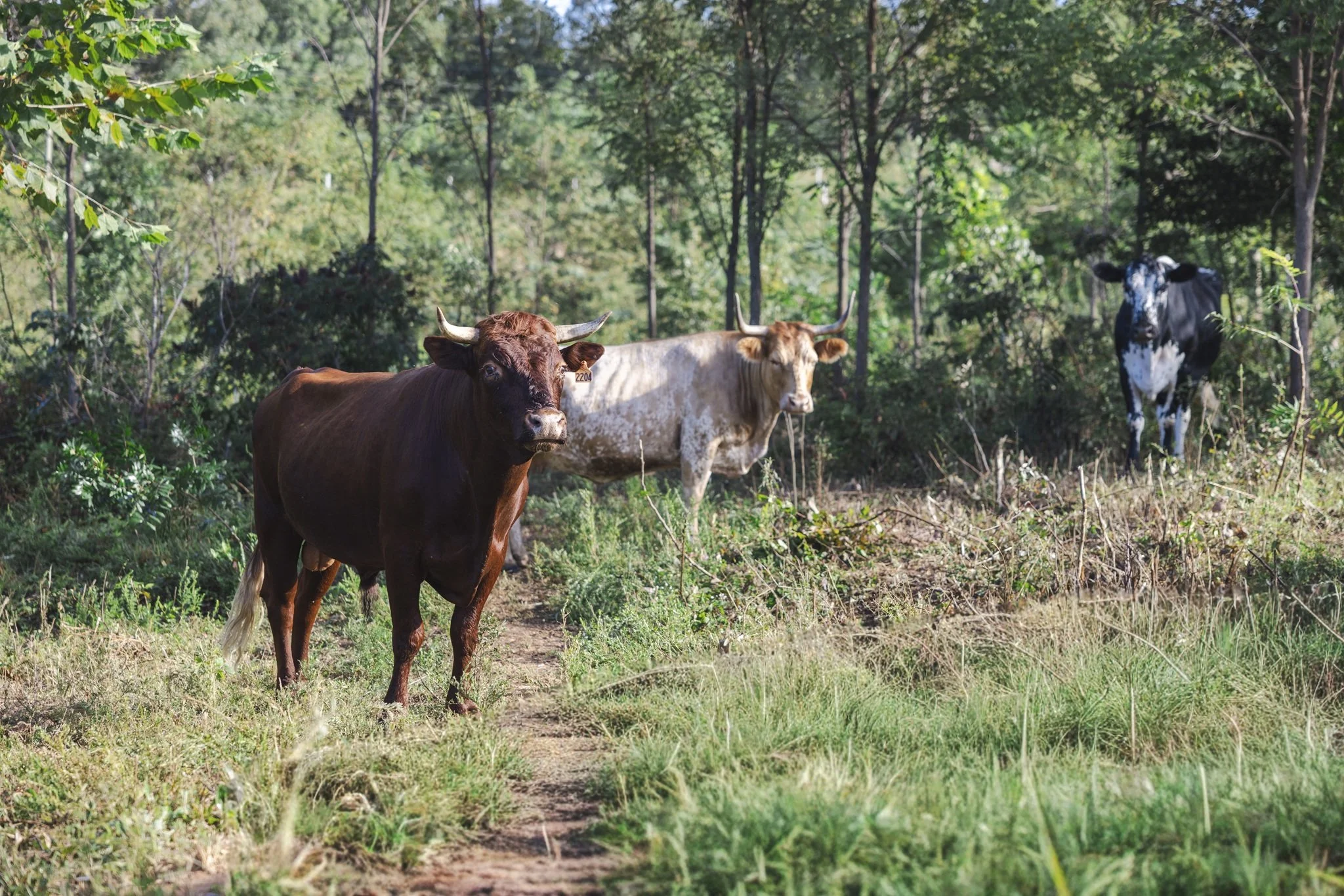
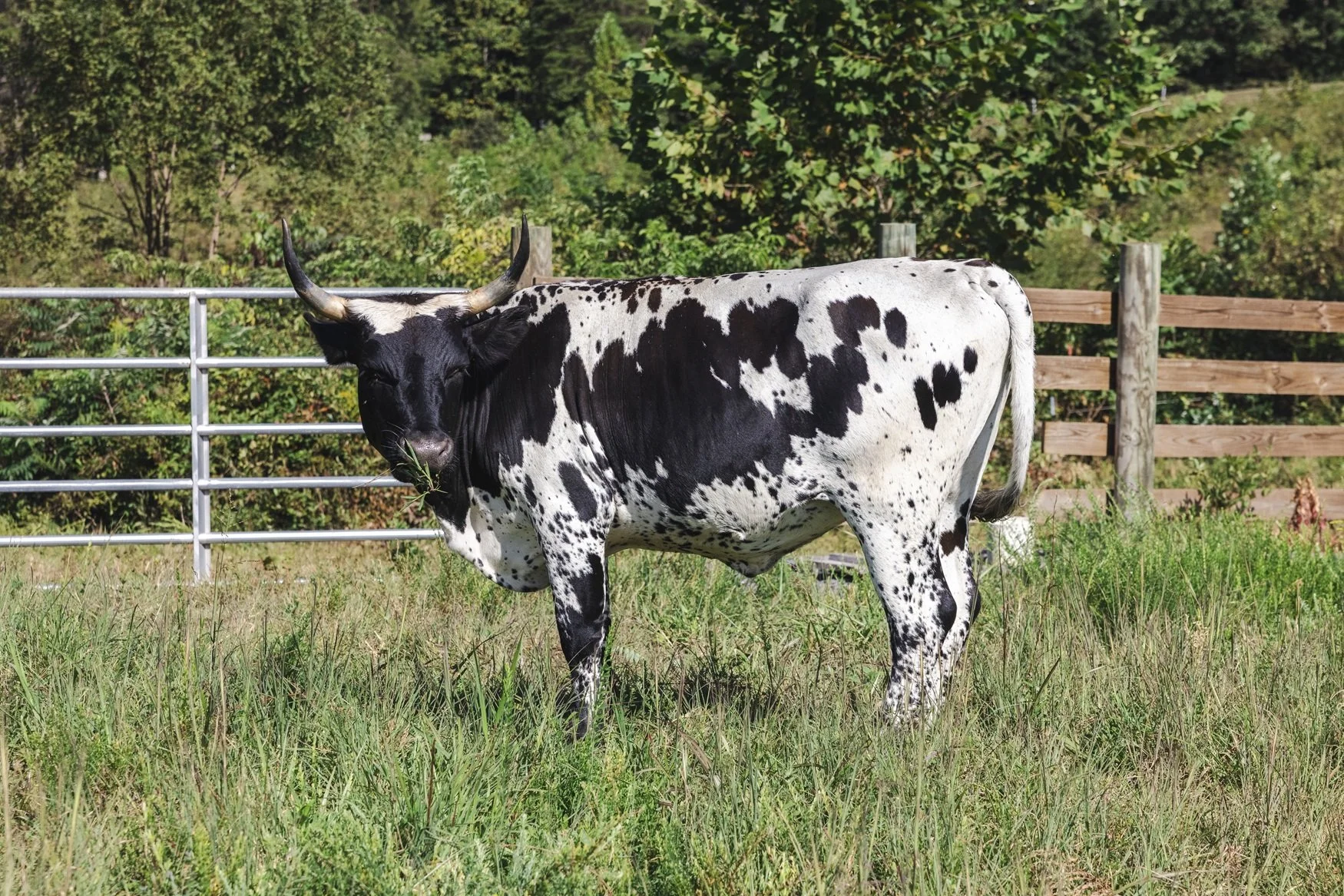
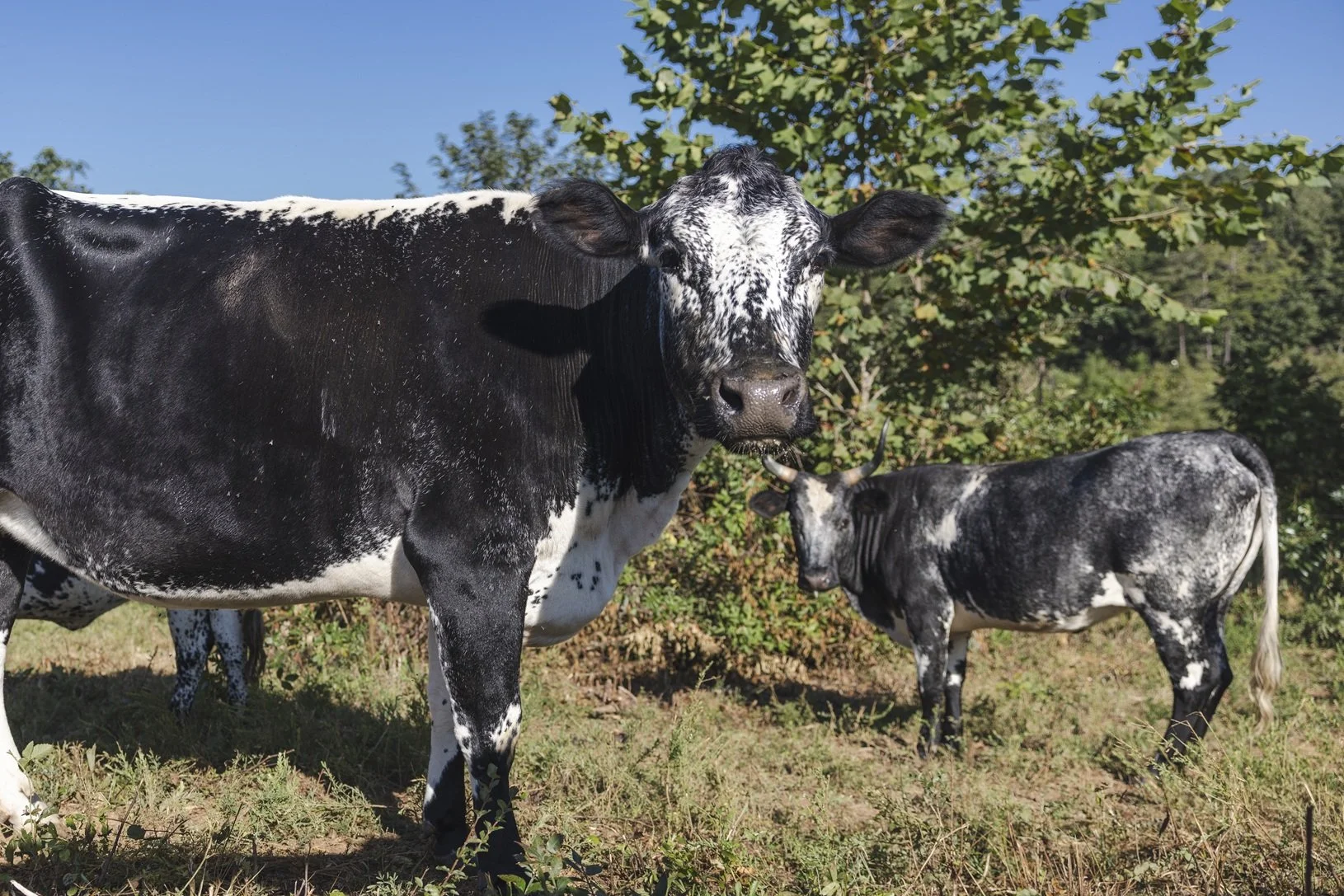
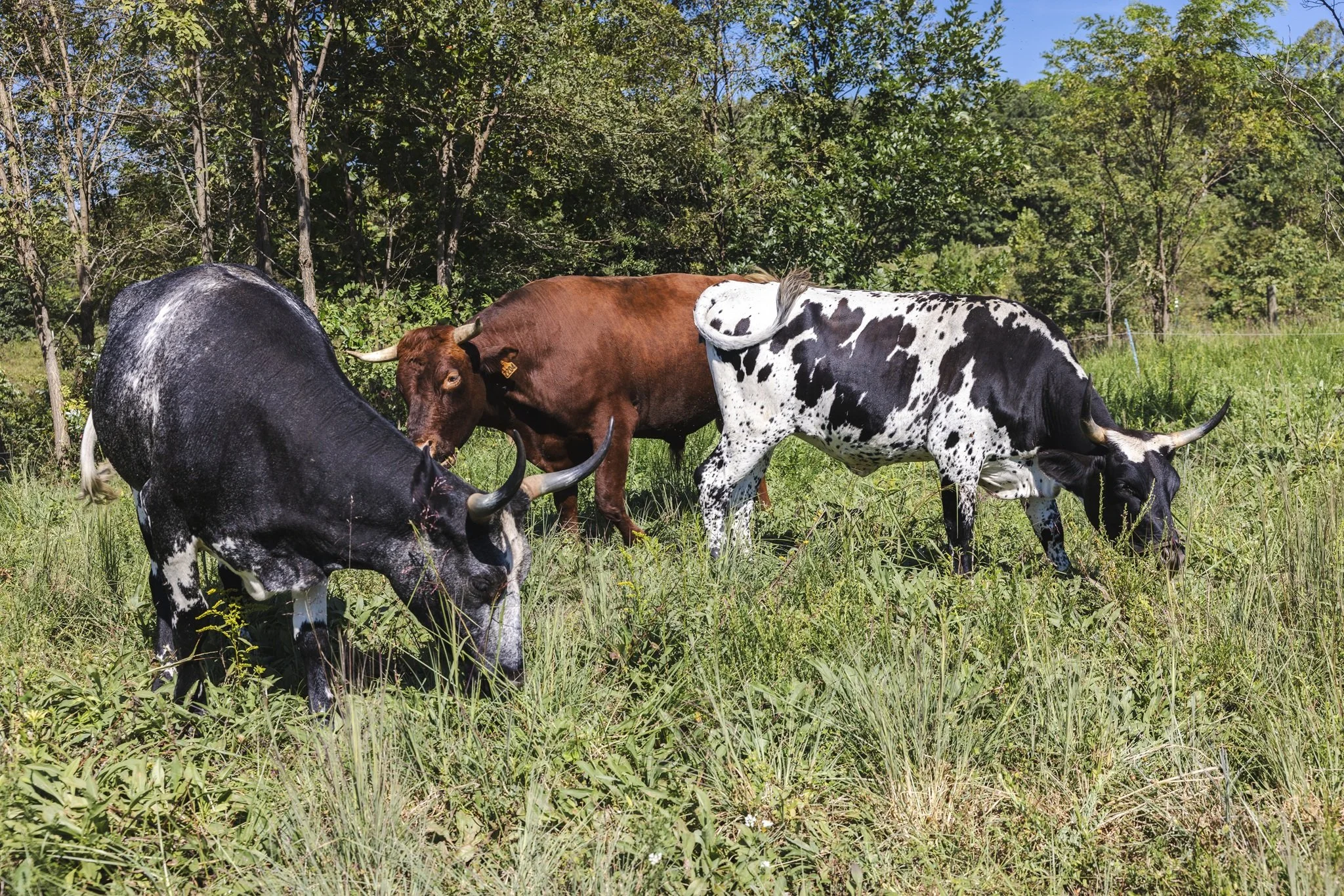
By allowing our heritage landrace genetics to mix with other hardy, grass-efficient breeds, we work to create a herd that is even more adaptable. These mixed genetics bring a diverse "toolkit" to the pasture—some individuals might excel at heat tolerance, while others are masters of winter grazing. This diversity ensures that no matter what the weather throws at us, the herd continues to thrive. We value the "mutt" as much as the "purebred" because, in a regenerative system, performance and health in the field always beat a paper pedigree.
Masters of the Woods and Silvopasture
Most cattle are viewed strictly as "grass eaters," but Pineywoods and their crosses are incredible browsers.
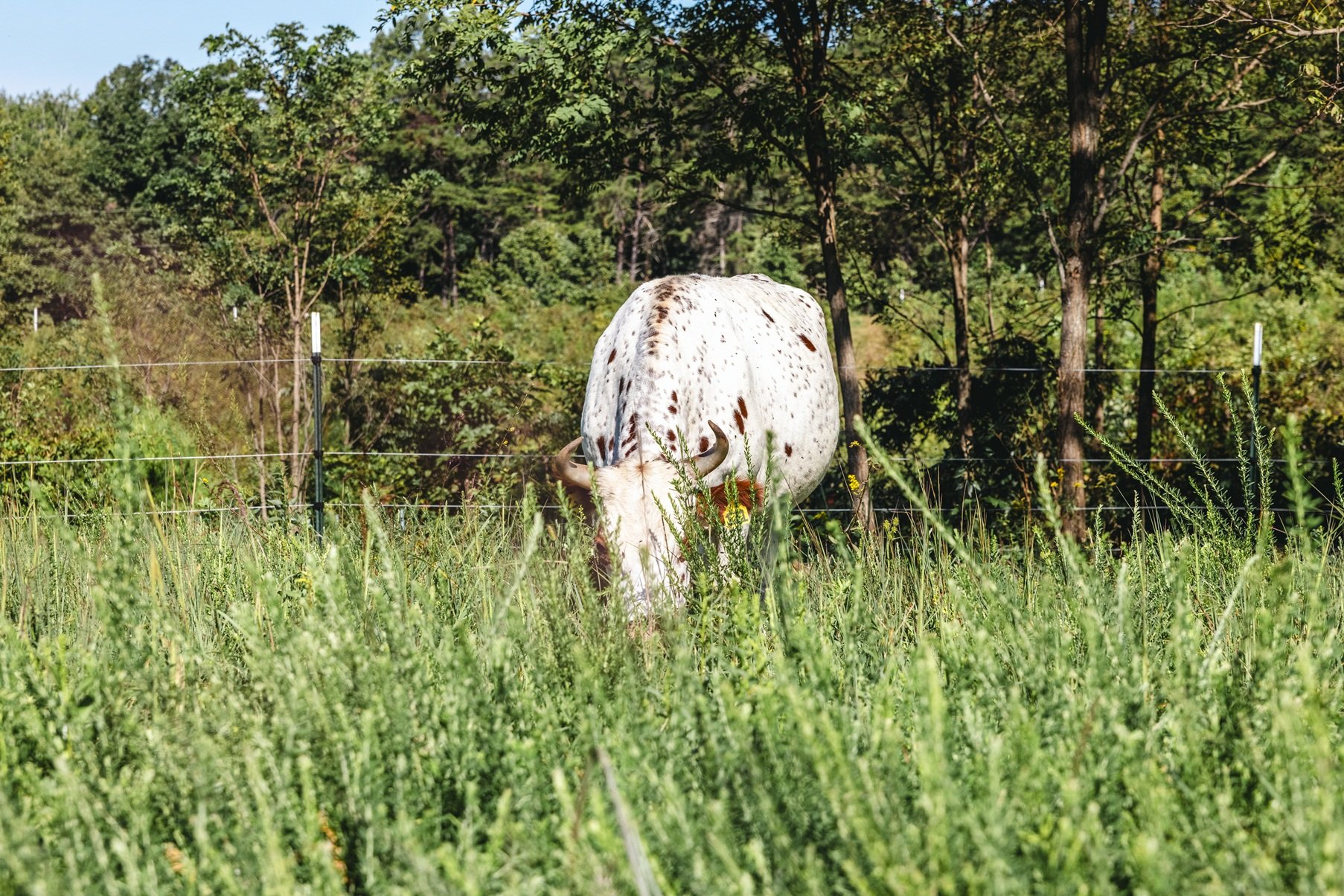
On our farm, we utilize silvopasture—the intentional integration of trees, forage, and livestock. While a typical beef cow might stand around waiting for a bale of hay, our cows look at a thicket of brambles, honeysuckle, or low-hanging hardwood branches and see a nutrient-dense buffet. They know how to make the locally available forage work for them.
By incorporating these genetics into our silvopasture, we achieve three major goals:
Natural Ecosystem Management: They act as our four-legged brush hogs, clearing underbrush and allowing sunlight to reach the forest floor to stimulate new grass growth.
Diverse Nutrition: By eating a variety of "browse" (leaves and woody plants) in addition to grass, they ingest a wider spectrum of minerals and phytonutrients.
Superior Flavor: Just like a wild deer has a deeper flavor profile than a farm-raised one, the diverse diet of our herd results in beef with an "honest," complex flavor that you simply won't find in a grain-fed steak.
Doing the Most with Our Little Patch of Earth
We are under no illusions that Purple Mockingbird Farm is going to move the needle for the national or global cattle industry on its own. We are a small-scale operation, and the industrial machine is massive.
However, we aren't trying to change the whole world; we are trying to do the absolute most for our little farm and our community. By focusing on these specific genetics, we are maximizing the health of our soil, the biodiversity of our woods, and the quality of the food we provide to our neighbors. Small-scale success is still success, and for us, that means building a resilient, sovereign food source right here in Appomattox.
Genetics for Food Sovereignty
In an industrial food system that prizes "bigger and faster," we prize resilience and efficiency. Our cattle are generally smaller-framed, which means they tread lighter on our soils and require fewer inputs to stay healthy.
By choosing adapted landrace genetics for our specific landscape, we are reducing our reliance on outside chemicals and expensive feed. This is the heart of Food Sovereignty: raising healthy animals that belong here, in a way that heals and enhances the ecosystem.
Want to support regenerative farming? Reserve your Beef Share here!